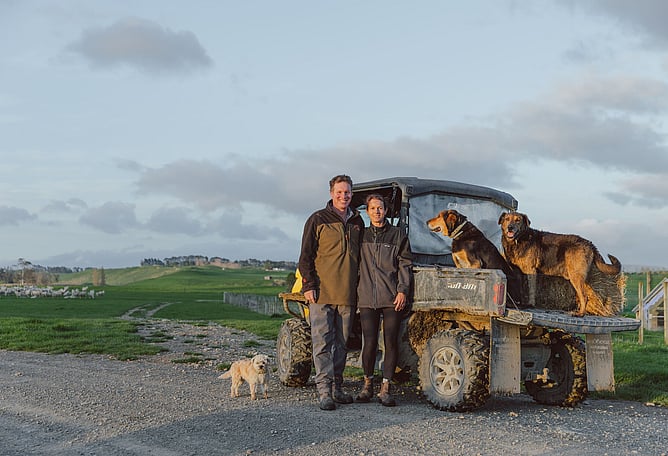
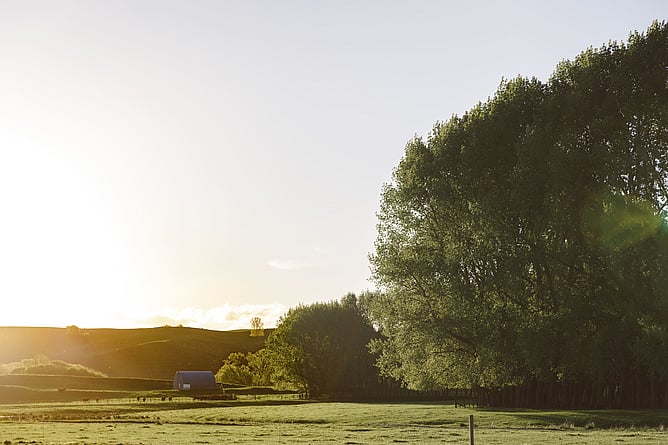
Hononga is a fourth-generation family farm owned by the Peacocks: Marcus and Georgie run the 600-hectare farm in the picturesque countryside of Waipukurau in Hawke’s Bay, with Marcus’s great-grandfather having first established the farm back in 1908.
It’s still very much a family affair, with Marcus managing the day-to-day farming with Georgie, and their children lending a hand when they are home from university.
In addition to their 600 hectares, the Peacocks have two lease blocks – 100ha and 200ha – around Waipoka, and across the 900ha total they manage sheep and beef breeding, finishing and store farming.
Hononga mainly supplies First Light Farms and Atkins Ranch, with Marcus explaining, “we are all about basic value-add at the moment, which is why we choose those two companies. It’s high performance, high end and that takes a lot of volatility out of it, which we love,”.
If you can't measure it, you can't manage it
Marcus believes that knowing the specific figures and key performance numbers of your farm is essential for running an effective farm business. He says while a farmer might know their lambing percentage, if they don’t also understand their live weight gain on stock or how many kilos of carcass weight per hectare they are producing, it just makes it too hard.
“I've always said, if you can't measure it, you can't manage it…FARMAX gives me all of that, so it's glorious.”
When Marcus first returned to the family farm, he took the advice of industry stalwart, Mike Petersen, who simply said: ‘you need to get FARMAX.’
“So I got it. That was 21 years ago, and I've used it religiously since, and I love it.”
Marcus initially only used FARMAX for feed budgeting, but over time he really focused on the tool’s financial capabilities and now he’s looking at the dollars in FARMAX every day.
“The financials are gold now, thinking about gross margin and income and production and utilisation. The joy of FARMAX is I'm always looking forward on it, not looking back.”
A big advantage of FARMAX is that it helps keep you one step ahead of the game. In the spring just gone when conditions on farm were horribly dry, Marcus was looking ahead in FARMAX, taking weight off weiners, taking liveweight off stock, buying store lambs later and seeing what the implications were; what was the situation with feed?
Then when the rain started – and didn’t stop – he flipped it the other way, using FARMAX to determine how to take control of the situation, identify the opportunities and make the most of them.
Some days, Marcus will only spend 15 minutes in FARMAX, other days it’s longer.
“Just the discipline of sitting down, even if that's once a week and just taking stock of where you're at. I think for a lot of [people], they think it's too hard, but once you get in the habit of it, it's very empowering to know where you’re sitting at any given point in time,” says Marcus.
“The more you use FARMAX and the better the information you put in, the better the information you get out. If you've got it and you don't use it, then there's no point having it, really. It's an expensive feed budget – I think we pay $220 a month – well, geez, it's the best $220 we spend, I reckon.”
The other main technology Marcus uses alongside FARMAX is Halter, which he says is “an absolute game-changer”, and the two tools are very complementary.
“I first got Halter to improve my utilisation. FARMAX tells me our utilisation, like most sheep and beef farms, is average – we're probably around 60 - 62%, as opposed to dairy, that's 80, 85, 90%. So, I said, right, I need to improve my utilisation. I think we've got that up to about 72% now, 73, which is great. But I can measure that because of FARMAX, whereas otherwise, I'd be just making assumptions.”
“The more you use FARMAX and the better the information you put in, the better the information you get out. If you've got it and you don't use it, then there's no point having it, really. It's an expensive feed budget – I think we pay $220 a month – well, geez, it's the best $220 we spend, I reckon.”
Marcus Peacock
The opportunity cost
Regularly checking in with how the farm business is key for Marcus and he asserts that it’s not enough to simply go to the accountant once a year, because by the time you’ve looked back at an entire year, you’re already well into the next one and making big decisions for the months ahead.
“You need to understand how you’re travelling this quarter. And even if most of us are only answerable to ourselves, because we're family owned, haven't got outside shareholders, you still need to have discipline around it,” he asserts.
Marcus understands how easy it can be to see the cost of a big farm change in terms of money leaving the bank account but knows it’s important to try and see the cost-benefit and the potential revenue or opportunity which that change might bring.
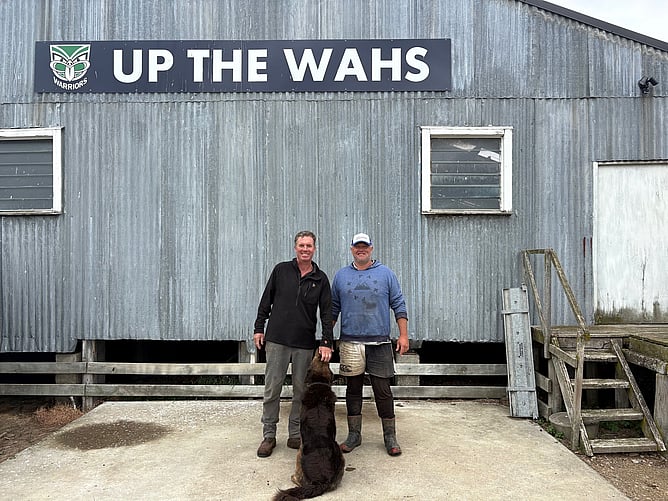
He has worked with rural consultant, Phil Tither, for many years, and they catch up annually to do big picture planning and sound out ideas using FARMAX.
“This was a perfect point in case: Phil said, on the 550 hectares let's put on 200 hectares of urea in the autumn. Bang, did it and we increased the stocking rate as a result. The difference was massive,” Marcus explains.
“Whereas everyone just looks at the cost – 40 tonne of urea is 20 odd, 30 grand – well, hang on, you make 100 grand as a result. That was through FARMAX, it was the best example of FARMAX.”
Flexible and proactive
“There always has been volatility in farming, but to me, farmers need to get more savvy and understand their business more. And a lot of these younger ones, they're better at it than a lot of others, but you’ve got to be more flexible.
“The ability to have flexibility in your system and know at any given point in time where you sit and what you can do and what the implications are is huge,” Marcus says.
He acknowledges that while farming is heavily impacted by external factors that can cause havoc, farmers can still stay in control by having options available and being able to pivot quickly when something major happens.
“Weather’s always been the problem, so control it as much as you can, but there's only one winner generally with Mother Nature, so you’ve just got to be able to move on your feet. Once again, knowing where you are at any given point in time, which FARMAX does, allows you to make decisions.
“No one knows what's happening going forward, but you need to be in a position to take advantage of it if you can. And often that decision is made too late because you're not sure what it looks like or what the advantages or the possibilities are. I think if a lot of farmers were to use the likes of FARMAX a lot more, their businesses would change for the better.”